
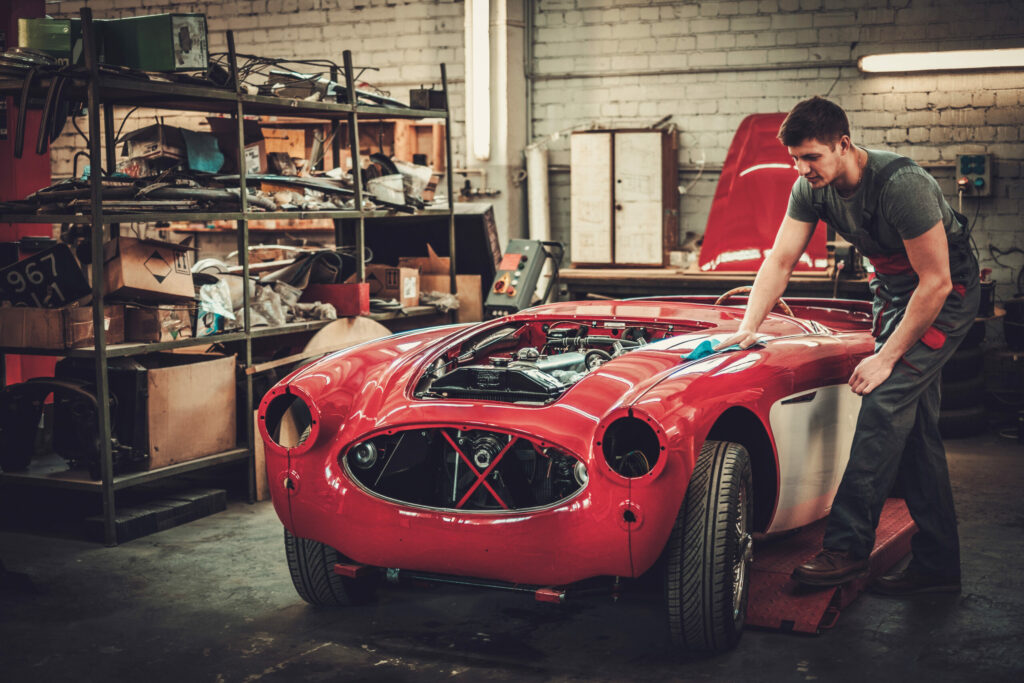
A concours-level restoration means bringing a classic car back to exactly how it looked and worked when it first left the factory. It’s the highest standard possible in car restoration.
Getting a car to concours level requires three main things: – Perfect accuracy in every part and detail – Complete historical documentation – Expert craftsmanship that matches original factory methods
Restoration shops achieve concours quality through: • Sourcing original or exact-match replacement parts • Using period-correct materials and finishes • Documenting each step with photos and research • Having expert judges verify authenticity
The end result is a classic car that’s identical to its factory condition, down to the smallest details like correct paint codes, factory markings, and assembly line production methods. These restorations often win top awards at prestigious car shows and can significantly increase a vehicle’s value.
Simple signs of concours quality include: – Flawless paint and chrome – Original or matching parts numbers – Factory-correct labels and stickers – Authentic materials and finishes – Complete documentation history
Understanding the Essence of Concours-Level Restorations
Concours-level car restoration means bringing classic cars back to their absolute original factory condition. These restorations represent the highest standard in the classic car world, where every single part must match what the car had when it first left the factory.
The restoration process starts with detailed research. Restorers track down the car’s history, find original factory specs, and locate authentic parts from the exact year and model. They carefully document each step, taking photos and notes to prove every part’s authenticity.
Expert restorers work like detectives and artists combined. They know exactly how each car model looked, felt, and worked when new. This knowledge helps them match original paint colors, materials, and even the correct markings on nuts and bolts.
The end result is more than just a restored car – it’s a perfect snapshot of automotive history. These cars often appear at prestigious shows where judges inspect every detail, from engine components to interior stitching, ensuring everything matches the car’s original build.
The Importance of Authenticity in Restoration Projects
Why Authenticity Matters in Classic Car Restoration
Authentic restoration means keeping a classic car true to its original factory condition. This directly impacts both the car’s value and historical significance.
Getting it right requires two main things: accurate research and detailed documentation. Before starting work, good restorers check original factory specs, period photos, and build sheets. They take pictures and notes of every step, from dismantling to reassembly.
Original parts, correct paint colors, and proper materials make the difference between a proper restoration and just a nice-looking old car. When buyers and collectors look at restored classics, they want proof that everything matches what rolled off the assembly line years ago.
Think of it like restoring an antique family photo – you want to preserve its original look, not create something new. Each correct detail helps tell the car’s story and keeps automotive history alive for future generations.
Sourcing Original Parts and Materials
Finding Original Parts and Materials
Original parts and materials are essential for authentic classic car restoration. To find the right parts, you need to:
- Research your car’s specific make, model, and year to identify correct factory parts
- Connect with reputable vintage car parts suppliers and specialists
- Join classic car clubs and online communities that share parts information
- Document part numbers and specifications from original manufacturer catalogs
Quality parts hunting takes time and patience. Focus first on critical components like engine parts, body panels, and trim pieces. Many restoration shops maintain networks of trusted suppliers and can help source hard-to-find items. For best results, collect photos and documentation of original parts to verify authenticity before purchasing replacements.
Remember: Original parts will typically cost more than reproductions but maintain the vehicle’s historical value and ensure proper fit and function.
Authentic Parts Identification
Finding Authentic Parts for Classic Cars
Identifying genuine parts for classic car restoration requires careful attention and research. The key steps are:
- Check part numbers and markings against original factory catalogs and guides
- Look for correct date codes that match the car’s production period
- Examine materials and manufacturing methods used when the car was built
Before buying any part, document its authenticity by: – Taking clear photos of all markings – Comparing against trusted reference materials – Getting verification from model experts – Checking original parts catalogs
Authentic parts show specific details that reproductions often miss: – Correct manufacturer stamps – Period-appropriate materials – Original finishing methods – Factory paint marks or stickers
Finding genuine parts takes time but ensures your restoration stays true to history. Work with reputable suppliers and join owner clubs to access expert knowledge and authentic components.
Vintage Material Sourcing
Finding Vintage Parts for Classic Cars
Sourcing original parts for classic cars takes patience, knowledge, and smart detective work. The goal is simple: find authentic pieces that match your car’s specific year and model.
Quality vintage parts come from three main places: – Specialty vintage car dealers – Classic car auctions – Well-maintained salvage yards
When searching for parts, focus on: 1. Material authenticity – parts should match the original manufacturing specs 2. Age-appropriate wear – genuine patina matters for collectors 3. Proper fit and function – reproduction parts often don’t match exactly
Success depends on building relationships with reliable sellers and learning to spot genuine parts from reproductions. Join local car clubs and online forums to connect with other collectors who share parts sources. Document numbers and specifications for your specific model to ensure accurate matches when searching.
Smart tip: Take photos of original parts before removal – they serve as valuable reference guides during the sourcing process.
Mastering the Craftsmanship Required for Perfection
Perfect Restoration Requires True Craftsmanship
Top-quality car restoration demands attention to every small detail. Getting it right means focusing on both big parts like fenders and tiny details like seat stitching. The key is using the right materials – ones that match exactly what the car had when it was first built.
Good restoration work comes from years of practice and hands-on experience. Think of it like putting together a complex puzzle where every piece must fit perfectly. Each part needs to work with others to make the car look and feel original. Success means combining careful planning with skilled handiwork to bring classic cars back to their original beauty.
The best results come when restorers: – Choose authentic materials – Pay attention to small details – Use time-tested techniques – Match original specifications – Practice proven methods
Precision in Every Detail
Restoring Classic Cars: Getting Every Detail Right
Perfect classic car restoration requires careful attention to detail and a step-by-step approach. Each part needs to match the car’s original design exactly, from the smallest screws to the largest body panels. Think of it like putting together a complex puzzle where every piece must fit perfectly.
Three Key Areas of Focus:
- Body Panel Fit Each door, hood, and panel must line up perfectly with the next. Gaps between panels should be even, just like when the car first left the factory. Good panel fit shows quality work and helps the car run better.
- Paint Quality Getting the paint right means careful prep work, smooth sanding, and expert polishing. The final finish should look deep and glossy, matching the car’s original color and shine.
- Interior Work From seat covers to dashboard details, every interior part needs the right look and feel. Correct materials, proper stitching, and authentic finishes make the inside look as good as new.
Perfect restoration takes time and patience, but the results are worth it. When done right, the car looks and works just like it did when new.
Authentic Materials Selection
Choosing Original Materials for Classic Car Restoration
Original parts and materials make the difference between an average and exceptional classic car restoration. Car restorers need the right materials that match what the manufacturer used when the car was first built.
Finding authentic materials involves: • Sourcing original-era fabrics and upholstery • Matching correct metal types and finishes • Using period-correct paint colors and textures • Finding authentic trim pieces and hardware
Quality materials directly affect both the car’s value and historical accuracy. Top restorers work with specialty suppliers to find rare original parts and create exact reproductions when needed. This attention to authentic materials helps preserve classic cars for future generations while maintaining their collector value.
This careful material selection process means restored cars look, feel, and perform just like they did when new. Getting the right materials takes time and research, but results in restorations that truly capture the car’s original character.
Expert Craftsmanship Techniques
Classic Car Restoration: Expert Techniques Made Simple
Expert craftsmen turn old classic cars into stunning showpieces through careful, hands-on restoration work. Getting a car ready for top-level shows (called concours events) takes skill, patience, and attention to detail.
Three main restoration techniques make the difference:
- Panel Beating: Skilled hands reshape and smooth damaged metal body panels to match the car’s original look. This process fixes dents, rust spots, and warped sections to create clean, flowing lines.
- Engine Work: Mechanics take apart and rebuild engines piece by piece. They clean, repair, or replace worn parts to get the engine running like new while keeping its original character.
- Interior Work: Specialists recreate seats, dashboards, and trim using materials that match what the factory used. This keeps the car historically accurate and authentic.
Success comes from getting every detail right – from the paint’s shine to the engine’s purr. These skills turn worn-out classics into valuable collector pieces worthy of any car show.
The Role of Historical Research in Restorations
Historical Research Makes Classic Car Restorations Accurate
Research is the foundation of quality classic car restoration. When bringing an old car back to life, knowing its exact history helps restorers get every detail right. They need to find old factory documents, original photos, and build sheets that show how the car was made.
Good restoration starts with checking authentic sources. Restorers look at: • Factory records showing original parts • Old photographs of the car • Build sheets listing specifications • Period marketing materials
This research helps match original colors, materials, and parts correctly. It shows which features belong on specific models and production dates. When restorers understand a car’s true history, they can make better choices about repairs and replacement parts.
The result? A restored car that looks and feels exactly as it did when it first left the factory. This attention to historical detail makes the difference between an average repair job and an award-winning restoration.
Paint and Finish: Achieving Factory-Quality Results
Getting Factory-Quality Paint Results
A perfect paint job makes or breaks a restoration project. To match the original factory finish, you need the right colors, techniques, and attention to detail. Here’s how to achieve showroom-quality results:
- Research the Right Colors: Find the exact factory paint codes for your car. Check build sheets, owner’s manuals, or restoration guides to match the original color perfectly.
- Check Current Paint: Look closely at any original paint sections on your car. This tells you the correct texture, shine, and finish to match.
- Use Professional Methods: Work with experienced painters who know factory painting techniques. They’ll use modern tools while following original factory methods to create a flawless finish.
These steps create a paint job that looks exactly like it did when the car first left the factory. The right paint and finish transform a good restoration into a great one.
Attention to Detail: The Key to Concours-Level Success
What Makes a Car Truly Concours-Quality
Perfect attention to detail sets concours-level car restorations apart from regular rebuilds. Think of it as creating a time machine – every single part must match exactly how the car left the factory.
Restorers check every piece carefully, from the smallest screws to the paint finish. They keep detailed records of each part and repair, making sure everything matches the car’s original build specifications. This attention to authenticity helps tell the car’s story and shows judges it’s restored correctly.
Success comes down to three key areas: – Exact matching of original parts and materials – Perfect documentation of all work – Precise attention to historical accuracy
This focused approach turns a restored car into a perfect example of automotive history that both judges and car lovers can appreciate.
The Expertise and Skills of Restoration Specialists
Car Restoration Experts: Skills and Knowledge
Restoration experts bring old cars back to life through a mix of hands-on skills and deep car knowledge. These specialists combine traditional crafts with modern techniques to rebuild classic vehicles to their original glory.
Core Skills of Car Restoration Experts:
- Practical Training
- Learning by doing under experienced mentors
- Regular updates on new tools and methods
- Study of original car designs and blueprints
- Record Keeping
- Photos before and during restoration
- Parts inventory tracking
- Step-by-step work logs
- Hands-on Skills
- Metal repair and fabrication
- Interior work and upholstery
- Engine rebuilding
- Paint and finish work
Each restoration project needs careful attention to detail and respect for the car’s history. Top restorers blend old-school methods with current technology to create show-quality results that match how the car looked when it first left the factory.
The best restoration work comes from experts who understand both the mechanical side and the historical value of classic cars. Their work preserves automotive history while making these vintage vehicles road-worthy again.
Evaluating Concours-Level Restorations in Competitions
Concours-level car restorations set the gold standard for bringing classic cars back to their original glory. These high-end competitions judge every detail of a restored car against strict historical standards.
Judges look at three main things: – The car’s authenticity compared to factory specifications – Quality of restoration work – Historical accuracy of all parts and materials
Getting a car ready for these shows means paying attention to the smallest details. Paint colors must match what the manufacturer used originally. Interior materials need to be exactly like those from when the car was first built. Even tiny parts like screws and bolts must be period-correct.
Modern restoration techniques are allowed, but they can’t change how the car would have looked when new. Success comes from perfectly balancing skilled craftsmanship with historical accuracy. The best restorations make classic cars look exactly as they did when they first rolled off the assembly line.
Frequently Asked Questions
What Is the Typical Cost of a Concours-Level Restoration?
A concours-level classic car restoration typically costs between $100,000 and $500,000, depending on the vehicle and scope of work. These restorations represent the highest standard in classic car rebuilding, where every detail must be perfect and historically accurate.
The high cost reflects the extensive work needed: complete disassembly, thorough documentation, rare parts sourcing, expert craftsmanship, and precise reassembly. Each component must match factory specifications exactly – from correct paint codes to authentic hardware and period-correct materials.
Classic car collectors choose concours restorations when they want their vehicles to compete in prestigious shows where judges examine every detail, down to original-style screws and proper date codes on components.
How Long Does a Concours-Level Restoration Project Usually Take?
A typical concours-level car restoration takes 1-3 years to complete, depending on the project’s scope. This timeframe reflects the deep level of detail and craftsmanship needed to bring a classic car back to its original factory condition.
The restoration length depends on three main factors: – Starting condition of the vehicle – Availability of original or period-correct parts – Access to skilled restoration specialists
Every part of the car must meet strict authenticity standards, from the engine components to the correct paint shade and interior materials. Some rare parts can take months to source, while complex mechanical work requires careful attention to maintain historical accuracy. Quality restorations can’t be rushed, as each step builds toward creating a show-worthy classic car that matches its original factory specifications.
Can a Previously Restored Vehicle Be Eligible for Concours-Level Restoration?
Yes, a previously restored car can absolutely reach concours-level quality with proper work.
The key is starting fresh – strip the car down completely and rebuild it to meet today’s higher restoration standards. Original parts must be carefully preserved and restored, while any replacement parts need to match exact factory specifications. The work requires detailed documentation, authentic materials, and precise attention to historical accuracy.
Think of it like renovating a historic home – even if someone updated it before, you can still bring it back to its true original condition with the right approach, research, and craftsmanship. Many award-winning show cars have gone through multiple restorations as standards and techniques improve over time.
Are There Specific Vehicles More Suited for Concours-Level Restoration?
Yes, some classic cars are better choices for concours-level restoration than others. Popular models from major manufacturers like Mercedes-Benz, Ferrari, and Porsche make excellent candidates because their original factory records, build sheets, and parts catalogs are well-preserved and accessible.
The best cars for concours restoration typically have: – Complete documentation of original specs and features – Strong manufacturer support for authentic parts – Large enthusiast communities sharing knowledge – Detailed assembly manuals and period photos – High potential value after restoration
Pre-1970s luxury and sports cars often work well because their craftsmanship and build quality make them worth the investment. Cars with significant racing history or limited production runs are also prime candidates, as their rarity and heritage increase their value when restored to original condition.
What Are Common Pitfalls in Attempting a Concours-Level Restoration?
Restoring a car to concours-level quality requires extreme attention to detail and perfect authenticity – two areas where many restorers make critical mistakes. The most common pitfalls happen when people use incorrect or non-original parts, or skip important details that judges will notice. Every part, down to the smallest screw or clip, must match what the factory originally installed. Getting it wrong can drop your car’s value and hurt its chances at shows.
To avoid these issues: – Research your car’s exact year, model and factory specifications – Only use verified authentic parts – Document every step with photos – Take time to check and double-check details – Consider hiring an expert for guidance on authenticity